

It only takes a second. One unnoticed puddle in a grocery aisle or a poorly lit stairway, and you’re on the ground, injured, confused, and unsure of what to do next.
You’re not alone. Every year, over 800,000 Americans are hospitalized because of fall-related injuries, most often due to head trauma or broken bones. These accidents don’t just happen to the elderly. They happen in stores, restaurants, sidewalks, and parking lots across places like Sugar Hill, Duluth, and Peachtree Corners.
In Gwinnett County, where bustling businesses and growing neighborhoods mean crowded spaces, slip-and-fall accidents are more common than you’d think. If you’re hurt on someone else’s property, the steps you take right afterward can make all the difference medically and legally.
That’s why many people turn to experienced slip & fall attorneys early on, to help them document what happened, preserve evidence, and protect their right to compensation.
Table of Contents
Precautionary Steps to take after a slip and fall accident
1. See a Doctor Even If You Feel Fine
After a fall, most people just want to get up, shake it off, and move on. But here’s the thing: some injuries don’t hurt right away. You might feel stiff the next day or wake up with a swollen ankle. Worse, you might not realize you’ve hit your head.
Getting checked by a doctor isn’t just about safety. It’s also how you prove the fall caused your injuries, not something else days later. Without that link, insurance companies can, and often do, push back hard.
Think of it like this:
| What You Do | What It Solves |
| Visit a clinic or ER | Documents the injury while it’s fresh |
| Ask for a written diagnosis | Links the injury to the fall |
| Stick to the treatment plan | Shows the injury was serious enough to treat |
Even if it feels minor, let a doctor decide. It could make or break your case later.
2. Report the Incident to the Right Person
As soon as you’re able, let someone in charge know what happened. If you fell in a store, that means a manager. At an apartment complex, it might be the property office. The key is to report it right away while the details (and scene) are still fresh.
When you delay reporting, things get tricky. Surveillance footage might be deleted. Witnesses forget. And worse, the property owner might claim they were never told anything happened.
Keep it simple:
- Say when and where you fell
- Mention any hazards (wet floor, loose carpet, poor lighting)
- Ask for a written report, or at least write down who you spoke with
If you can, take a photo of the report or get a copy emailed. This becomes part of your paper trail, which is critical later when insurance or attorneys ask for proof.
3. Document the Scene and Gather Evidence
Before the hazard disappears snap pictures. A wet floor dries fast, and warning signs can appear after the fact. Use your phone to take photos of:
- What made you fall (liquid, uneven floor, broken tile)
- The wider area (lighting, signage, layout)
- Your injuries, if visible
If anyone saw you fall, ask for their name and number. Witnesses help confirm what happened, especially if the property owner pushes back.
Here’s a quick checklist:
| What to Capture | Why It Helps |
| Scene photos | Proves unsafe conditions |
| Time & date stamps | Shows when the incident occurred |
| Witness contacts | Supports your version of events |
| Your shoes/clothing | Can show slipping hazard or damage |
The more you gather now, the stronger your claim will be later.
4. Avoid These Common Mistakes
Slip-and-fall cases can fall apart fast, often because of simple, avoidable missteps. Here are a few you want to steer clear of:
- Not reporting the fall: If there’s no report, it’s your word against theirs.
- Leaving without photos: Hazards vanish. Photos prove they existed.
- Posting about it online: Insurance adjusters check social media. A single post can backfire.
- Talking too much to insurance: Stick to the facts, or better, let your lawyer do the talking.
- Delaying medical care: The longer you wait, the weaker your injury claim looks.
Even one of these can be used to reduce or deny compensation. If you’re unsure, speak to a lawyer before making statements or filling out paperwork.
5. Contact a Personal Injury Attorney in Gwinnett County
You don’t need to face this alone. A Gwinnett County personal injury attorney can guide you, deal with the insurance company, and make sure you don’t get shortchanged.
Here’s how they help:
| What They Do | Why It Counts |
| Review your case | Spots details you may miss |
| Talk to the insurer | Keeps them from twisting your words |
| File your claim properly | Avoids missing deadlines or paperwork errors |
| Push for fair compensation | Includes pain, medical bills, and lost time |
Most offer a free consultation and only get paid if you win. So it’s worth calling, even if you’re unsure you have a case.
6. Know Your Rights Under Georgia Law
In Georgia, property owners have a duty of care. That means they’re legally required to keep walkways safe. If you slipped because they didn’t fix or warn about a hazard, you may have a case under premises liability laws.
But there’s a catch: Georgia follows comparative negligence. If they prove you were partly at fault, like if you were distracted, you could get less compensation.
Here’s how the law plays out:
| Legal Concept | What It Means for You |
| Premises Liability | Owners must keep spaces reasonably safe |
| Comparative Negligence | You can still recover even if partly at fault |
| Statute of Limitations | You have 2 years to file a personal injury claim in Georgia |
If you miss that deadline, your claim could be thrown out of court, even if it’s strong. That’s why acting quickly matters.
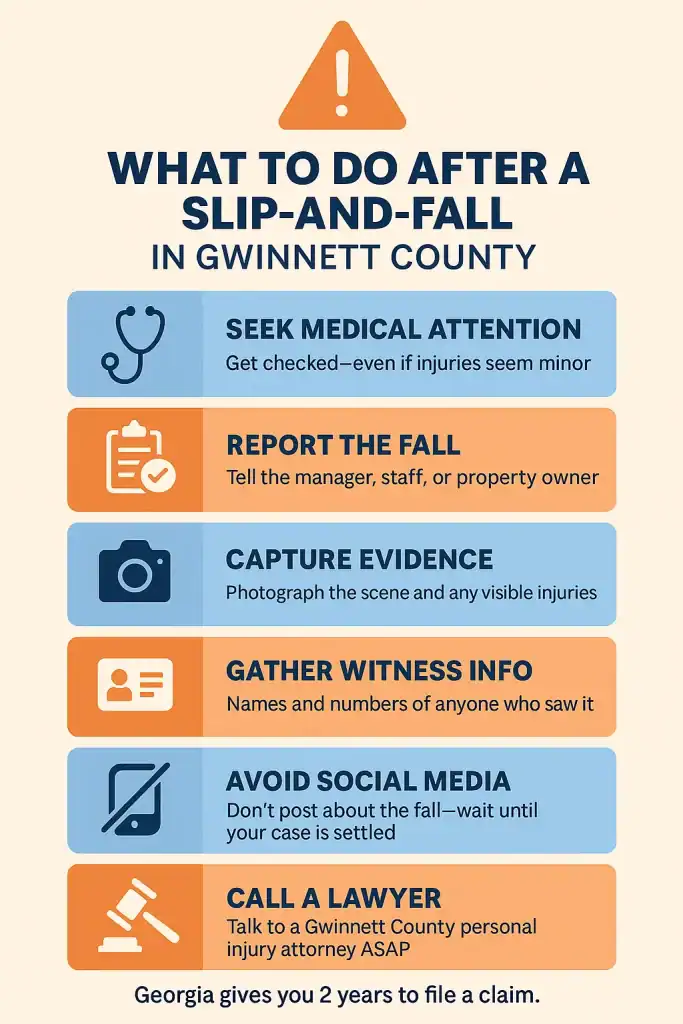
7. Summary: Your Post-Fall Checklist
Slip-and-fall cases move fast, and so should you. Here’s a quick recap of what to do:
- Get medical help right away, even if you feel fine.
- Report the fall to a manager, owner, or staff.
- Take photos of the scene and your injuries.
- Collect contact info from witnesses.
- Avoid posting online or giving too many details to insurance.
- Call a personal injury attorney in Gwinnett County to protect your rights.
Waiting too long can cost you: evidence disappears, deadlines pass, and claims weaken. Don’t let that happen.
Conclusion: Don’t Let One Fall Cost You Everything
Slip-and-fall accidents can feel minor in the moment, but the medical bills, lost wages, and emotional distress that follow often aren’t. Acting fast, documenting everything, and getting legal support early can mean the difference between a dismissed case and fair compensation.
If you’re in Gwinnett County and unsure where to turn, Langrin Robertson Law is a local firm known for guiding families through personal injury cases with clarity, compassion, and results. Their team understands Georgia’s premises liability laws inside and out, and they offer free consultations to help you make the right call from day one.
You don’t need to navigate this alone. Protect your health. Protect your rights. And if you need help, know where to find it.