
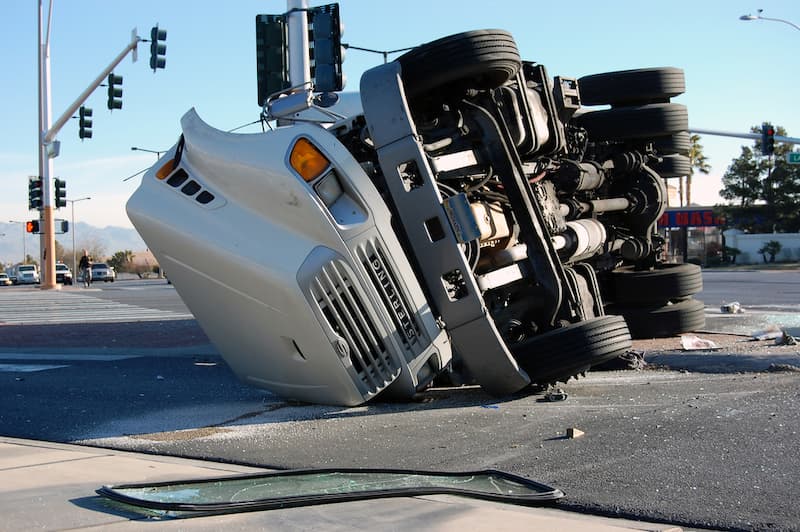
Accidents involving trucks, particularly big commercial trucks like 18-wheelers and semi-trucks, are a major safety hazard on major highways in Georgia. Georgia is also a major freight hub in the Southeastern region, and it has main corridors such as Interstate 75 (I-75), Interstate 85 (I-85), Interstate 285 (I-285), which means that truck traffic is high in the state of Georgia -and this is, unfortunately, accompanied by high rates of crashes.
Knowledge of data, trends, and causes of truck accidents is critical to policymakers, drivers, safety advocates, and insurance companies. Here we have the latest and official Georgia Truck Accident Statistics for 2025, trends, crash analysis, and tips to practice safer in-blogs.
Table of Contents
Georgia Truck Accident Statistics Summary
Below is a summarized table capturing truck crash and fatality data over a decade (2013‑2023). These figures show significant growth in truck crashes and rising fatalities, a trend that demands urgent safety strategies.
Georgia Truck Accident Trends (2013‑2023)
The period from 2013 and 2023 in Georgia was marked by the consistent growth of truck-related accidents and deaths, which could be attributed to the growth in freight transportation and congestion on its roads. During this decade, the number of truck crashes increased significantly, and the number of fatal accidents also showed an upward trend.
The safety rules and technology of vehicles were improving, but the human factor, including driver fatigue, excessive driving speed, and heavy traffic between states, still caused severe accidents. Incidents were the most concentrated in major freight corridors, such as I-75 and I-85. These trends in the long term show the increasing effects of commercial truck traffic on road safety and the necessity to take more serious preventive and enforcement actions across Georgia.
| Year | Total Truck Crashes | Truck‑Related Fatalities |
| 2013 | 19,555 | 142 |
| 2014 | 20,984 | 146 |
| 2015 | 23,339 | 183 |
| 2016 | 25,981 | 193 |
| 2017 | 26,742 | 202 |
| 2018 | 27,789 | 163 |
| 2019 | – | 204 |
| 2020 | – | 234 |
| 2021 | data not available | 244 |
| 2022 | – | 237 |
| 2023 | 50,344 | 257 |
Note: Some years lack total crash data due to reporting format changes. All fatality counts derive from state traffic safety and legal source analyses.
Key Insight: Over 310,000 truck crashes were reported between 2013 and 2023, with fatalities increasing by ~81% from 142 in 2013 to 257 in 2023
2021 Large Truck Crashes: Key Crash Facts
The Georgia Governor’s Office of Highway Safety report has the breakdown of the large truck crashes in 2021, which remains valid in the analysis in 2025:
Large Trucks (2021)
There were 244 deaths related to big trucks.
In 2021, 14 percent of all traffic fatalities involved at least one large truck.
Multi-vehicle crashes had 92 percent of serious injuries and 86 percent of fatalities.
The occupants of other vehicles (people on other trucks) comprised 76% of those who died.
These statistics highlight the fact that the other motorists, rather than the truck drivers, are negatively affected by truck crashes
2025 Updates: Crash Fatalities & Statewide Fatal Crash Share
Recent state data shows truck crashes contribute significantly to Georgia’s traffic deaths:
- Commercial trucks account for about 14% of all traffic fatalities statewide, even though trucks are a small percentage of total vehicles.
- Persistent fatality levels hover around 235‑245 per year (2020‑2022).
This means nearly 1 in every 7 traffic deaths in Georgia involves a large commercial truck.
Where Do Truck Accidents Occur?
Truck accidents have an uneven distribution in Georgia. Some highways, interstates, and urban cities experience disparate amounts of crash rates because of traffic congestion, freight, and drivers. The knowledge of these high-risk areas will aid drivers in remaining alert and encourage policymakers to aim at enhancing safety.
Most High‑Risk Roadways
The geography of Georgia and freight logistics sets up specific dangerous zones:
- Interstate Corridors: Major routes that have high truck volumes include I-75, I-85, and I-285.
- Urban Metro Areas: The Atlanta area records an increasing number of truck crashes annually.
Georgia’s geography and freight logistics create distinct danger zones:
Atlanta Metro Truck Crash Data (Recent Estimates)
| Type of Crash (Metro Atlanta) | Crash Count (2023) |
| Total Truck Crashes | 1,923 |
| Fatal Accidents | 87 |
| Serious Injury Crashes | 564 |
| Property Damage Only | 1,272 |
Peak crash hours: 6‑9 AM (morning) and 4‑7 PM (evening) coinciding with commuter peaks, increasing risk for multi‑vehicle collisions.
Common Causes of Truck Accidents in Georgia
The information on the causes of crashes is crucial to prevention. Some common causes in accordance with traffic safety and law sources are:
Driver Fatigue & Hours of Service Violations
Truck drivers are likely to work long hours under delivery pressure. Despite Electronic Logging Devices (ELD) being enforced to measure the number of hours worked, fatigue is one of the major causes of crashes
Distracted Driving
Trucking introduces long periods of roadway that may cause accidents due to distractions such as smartphones or devices installed in the cabs.
Improper Cargo Loading
Unsecured or poorly loaded cargo may result in rollovers, jackknifes, and debris. Brodie Law Group.
peeding & Congestion
Extremely fast speeds (on interstates) add to the distance of stopping – a critical problem when bulky cars collide with slower vehicles.
Truck Accident Impact: Who Is Hurt?
According to the 2021 safety report, the data are:
- Claims on other vehicles accounted for 76 percent of deaths and severe injuries.
- gahighwaysafety.org 16 percent of them were truck drivers.
- Five percent were non-motorists (pedestrians, cyclists).
This underscores the fact that the occupants of passenger cars suffer disproportionately in road accidents involving trucks.
Statistical Breakdown: Fatal vs Injury Crashes
In Georgia, accidents involving trucks are diverse in terms of their severity, yet fatal crashes and serious injury crashes represent a disproportionate percentage of road damage as compared to passenger vehicle crashes. The weight and size of the commercial trucks make the collisions catastrophic, particularly in the cases of multi-vehicle collisions.
According to Georgia traffic safety report statistics, fatal truck collisions constitute a considerable percentage of traffic fatalities despite the fact that trucks are a small percentage of the total vehicles on the road. The unbalance of force during collisions is shown through the fact that most cases of fatal and serious injuries are caused by passenger vehicles and not truck drivers.
Crashes resulting in injuries are much more prevalent than fatal ones, and often happen in urban and highway corridors, where traffic jams, switching lanes, and abrupt stops present a higher risk of collisions. Such injuries related accidents normally result in permanent health problems, revenue loss, and prolonged healing for the victims.
The statistics on the safety of following behind large trucks show that multi-vehicle accidents comprise the majority of lethal and non-lethal accidents. This statistical breakdown can guide policymakers and safety advocates to devote resources to preventive measures that can minimize the number of fatalities as well as serious injuries on Georgia highways.
| Crash Severity | Percentage of Total |
| Fatal Crashes | 14% of total traffic fatalities in GA |
| Multi‑Vehicle Crashes | 86% of truck crashes |
| Serious Injuries | Most occur in multi‑vehicle incidents |
Prevention & Safety Measures for Truck Accidents in Georgia
The truck accidents need to be prevented through the efforts of drivers, policymakers, and leaders in the logistics sector. By taking adequate safety precautions, crashes and deaths on the busy Georgia highways can be greatly minimized.
For Drivers
The accident prevention of truck drivers is significant. It is important to maintain a safe following distance, particularly when there are other trucks and heavy vehicles. Collisions may be prevented when changing lanes or merging by staying in the clear lanes (No-Zone areas). In order to combat fatigue as a significant cause of road accidents on long-distance highways, drivers must be vigilant and make frequent rest stops. Minimizing distractions, e.g., mobile phones or onboard systems, will keep drivers on the road and react fast to any dangers.
For Policy Makers
Policymakers can enhance safety by increasing enforcement of Hours of Service compliance, ensuring drivers do not exceed legal limits. Investing in updated signage on key freight corridors improves awareness of curves, merges, and intersections. Additionally, enhancing truck driver training programs equips operators with the skills to navigate high-risk areas safely.
Logistics Leaders
Freight companies should adopt advanced safety technology, including collision avoidance systems and telematics, to monitor driver behavior and prevent accidents. Strengthening pre-trip inspections and regular maintenance checks ensures trucks remain in a safe operating condition, reducing mechanical failure risks.
Implementing these measures collectively can significantly reduce truck crashes and save lives across Georgia highways.
Conclusion
In Georgia, truck accidents are a significant concern for the safety of the population in 2025. As truck crashes cause approximately one out of every seven traffic deaths and the crashes are on the rise, drivers, policymakers, and safety advocates cannot afford to wait any longer to take action with respect to this issue.
This is because the knowledge of the statistics and trends of these accidents, whether on rural roads or busy highways in urban areas, would help the stakeholders to minimize risk and save more lives in the future.