

Getting into a car accident is stressful enough, but what if you’re wrongly blamed for causing it? In Georgia, where fault plays a direct role in determining who pays for injuries, damages, and insurance claims, proving you’re not at fault is critical. Even a small misstep, or missing detail can lead to sky-high premiums, messy court disputes, or risk losing your license.
This is where a seasoned Georgia car accident lawyer can make all the difference, helping you gather the right evidence, challenge inaccurate police reports, and defend your version of events in court or settlement negotiations.
The upside? Georgia’s comparative negligence rule gives you a chance to fight back and recover damages, as long as you weren’t more to blame than the other driver. This guide walks you through exactly what to do after a crash, how to protect your rights, and how to build solid evidence that proves your innocence.
Whether you’re dealing with stubborn insurance companies or looking to understand your legal options, here’s how to take the right steps from day one.
Table of Contents
Understanding Fault in Georgia Car Accidents
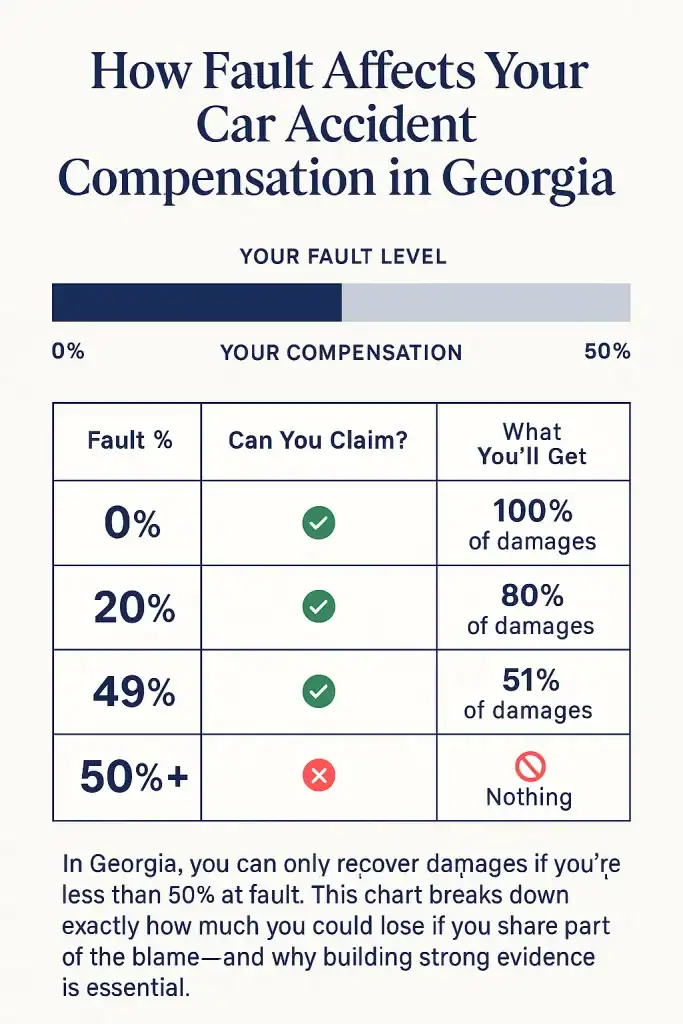
In Georgia, fault is what decides who pays for what after a crash. If the state finds you’re half or more to blame, you won’t get paid by the other driver.
But figuring out who’s at fault isn’t always clear. Usually, both drivers share some responsibility. Things like the police report, what witnesses say, how the cars were damaged, and even tickets given all help sort it out.
Here’s how Georgia’s fault rules actually work:
Table: Fault vs. Compensation in Georgia
| Your Fault Percentage | Can You Claim Compensation? | What You Get |
| 0% | ✅ Yes | Full |
| 20% | ✅ Yes | 80% of your total damages |
| 49% | ✅ Yes | 51% of your total damages |
| 50% or more | ❌ No | You’re barred from claiming |
So if your damages total $10,000 and you’re 20% at fault, you’ll only be able to claim $8,000. That is, if you’ve got the proof to back it up.
That’s why every choice you make at the accident scene counts: what you say and the evidence you collect. Even small slip-ups or unclear answers can be turned against you by insurance companies.
First Things to Do at the Scene (to Protect Yourself)
Right after a car accident in Georgia, what you do matters. The police report and how much evidence you gather can make or break your case.
Do this at the scene:
- Take photos of all vehicle damage, the road, and nearby signs.
- Get the names and phone numbers of everyone involved: drivers and witnesses. You never know who might back you up later.
- Give out your insurance details, but don’t say anything that sounds like you’re admitting fault. Keep it neutral.
- Stick to facts. No opinions, no guessing. Tell it like it happened, and let the evidence speak for itself.
- Call the police, and make sure you get a copy of the report. It might just be your best backup later on.
Table: Key Evidence That Can Back You Up
| Type of Evidence | Why It Matters |
| Photos & Videos | Freeze the scene: damage, weather, signs, surroundings |
| Witness Statements | Add weight with someone else backing your story |
| Dashcam Footage | Catches what happened, second by second |
| Police Report | Carries legal weight as the official version |
| Medical Records | Show what injuries you had and when they happened |
| Repair Estimates | Help prove just how much the crash cost you |
It might seem like extra effort now, but this stuff can make or break your case later.
Common Mistakes That Could Make You Look At-Fault
You might have done nothing wrong, but a few small missteps after a crash can work against you.
- Saying “I’m sorry” at the scene. It’s a natural reaction, especially if someone’s hurt. But insurers may take it as an admission, even if it wasn’t.
- Not seeing a doctor. Some injuries don’t show up right away. Skipping a checkup gives insurance adjusters room to argue your pain came from something else.
- No photos, no records. If there’s no clear record of what happened or what was damaged, you lose leverage.
- Posting anything online. Even a quick “I’m okay” post can be used to question how badly you were hurt.
Mistakes That Can Hurt Your Case
| What Happens | Why It Can Backfire |
| Saying “I’m sorry” | Sounds polite, but can be taken as admitting fault |
| Skipping a doctor visit | No medical record = no proof you were hurt |
| Not taking photos | You’ll have nothing to show what really happened |
| Posting about it online | A single post can be used to question your story |
These things might not seem like a big deal at the moment, but they can come back to bite you when you’re trying to get your claim sorted.
When to Call a Car Accident Attorney in Georgia
You don’t always need a lawyer, but waiting too long to get help can backfire, especially under Georgia’s comparative fault law. If you’re even 1% to blame, it could reduce what you’re owed.
When It’s Worth Calling a Lawyer:
- You’re being blamed for the crash
- You have serious injuries or medical bills piling up
- The insurance offer feels too low
- Fault isn’t clear, or is being disputed
- The other driver is uninsured or was driving for work
What a Good Lawyer Does:
- Gathers evidence and handles the paperwork
- Deals with the insurance company for you
- Makes sure you don’t miss any deadlines
- Pushes for full compensation: medical costs, lost wages, and more
Firms like Langrin-Robertson Law handle accident cases across Georgia. Having someone in your corner early on can make a huge difference, especially when the other side is already lawyering up.
How Long Do You Have to File a Claim in Georgia?
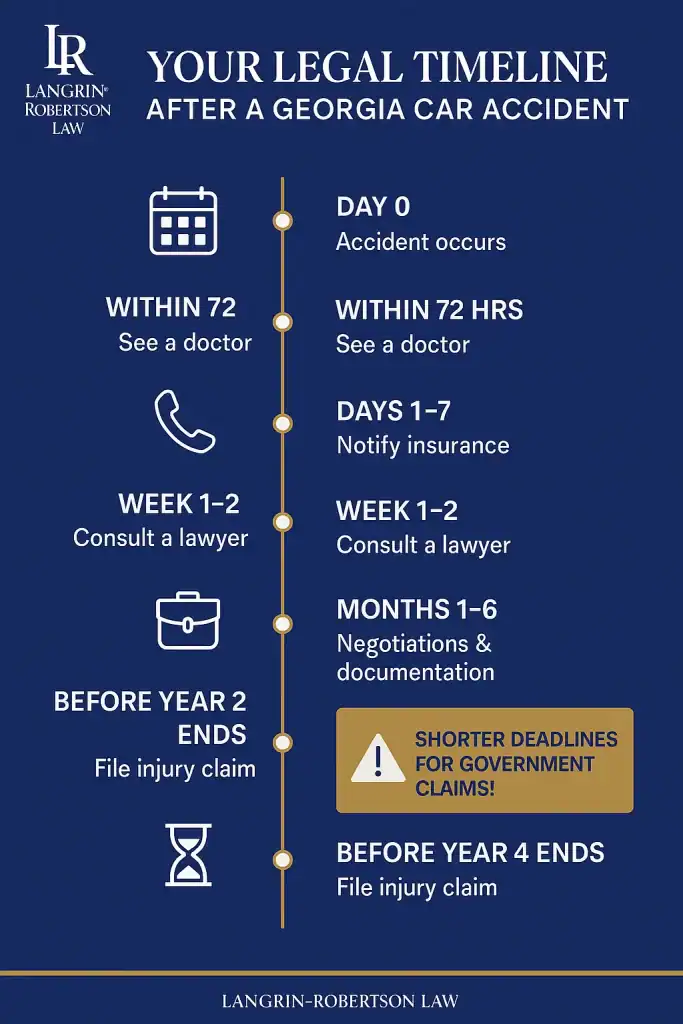
Georgia gives you two years from the crash date to file a claim. It might seem like plenty, but miss that deadline, and you could lose your right to any compensation, no matter how strong your case is.
What If You Miss It?
There are no do-overs. Courts typically dismiss cases filed late, and insurance companies have zero obligation to settle. The clock starts ticking the day of the accident, don’t let it run out.
Your Legal Timeline at a Glance:
| Step | When It Should Happen |
| Seek Medical Attention | Right away, within 72 hours |
| File an Insurance Claim | Within days or the first week |
| Hire a Lawyer | Best within 1–2 weeks |
| Settlement Talks Begin | 2 to 6 months on average |
| File a Lawsuit (if needed) | Before the 2-year deadline |
Final Thoughts: Protect Yourself After a Car Accident in Georgia
A car crash can leave you shaken, and the legal aftermath isn’t always straightforward. From understanding Georgia car accident laws to meeting the injury claim timeline, every step counts. One missed detail or delay could cost you the compensation you’re entitled to.
If you’re unsure what to do after a car crash in Georgia, it helps to have someone in your corner. Langrin-Robertson Law has deep experience handling auto accident claims in Georgia, from gathering evidence to managing insurance settlement tactics. They’ll help you avoid costly missteps, and fight to get what you deserve.
Need guidance? A free case review could give you the clarity you need to move forward confidently.
FAQs
Is Georgia a no-fault state for car accidents?
No, Georgia is not a no-fault state. It follows an at-fault system. That means the person who caused the accident (or their insurance) is responsible for covering the other driver’s losses like medical bills, vehicle repairs, lost income, and so on. You don’t automatically go through your own insurance unless you have optional coverage like MedPay or collision.
How is fault determined in a car accident in Georgia?
Georgia doesn’t leave fault up to chance, but goes for hardcore evidence. After a crash, investigators look at the police report, where the damage happened on each car, any traffic laws that were broken, and what witnesses or dashcams captured. Georgia follows modified comparative fault, which means if you’re less than 50% at fault, you can still file a claim, but your payout will be reduced by your percentage of fault. So yes, even 10% can cost you.
What happens after a car accident that’s not your fault in Georgia?
If the accident wasn’t your fault, Georgia law lets you go after the at-fault driver’s insurance for damages comprising medical bills, car repairs, lost wages, the whole deal. But just because you’re not at fault doesn’t mean it’s automatic. You’ll still need to show proof: think photos, the police report, maybe even witness statements. The more solid your case, the faster and fairer your payout.
How long does an at-fault accident stay on your record in Georgia?
In Georgia, a car accident where you’re at fault usually sticks to your driving record for three years. But here’s the kicker: insurance companies might hold it against you for up to five years when setting your rates. That means higher premiums, especially if it’s not your first offense. Drive safely and avoid points on your license to keep things clean moving forward.