
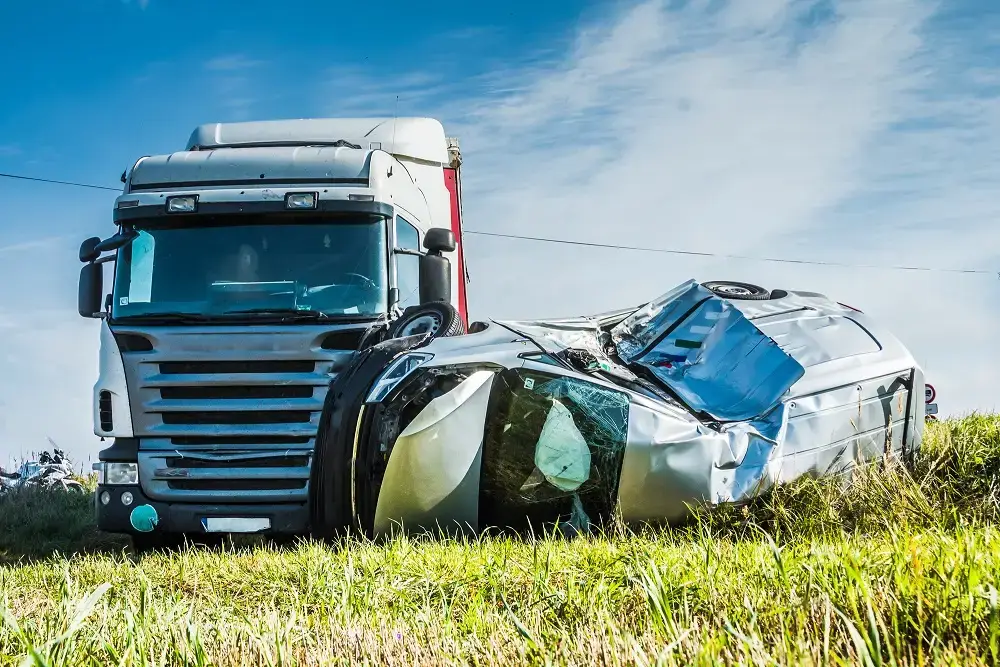
Each year, over 5,000 lives are lost in large truck crashes across the U.S., and Georgia consistently ranks among the top 10 states for trucking accidents. With its busy interstates and heavy freight traffic, truck accidents are an unfortunate reality here. From truck rollover accidents on I‑75 to devastating crashes on rural highways, the toll is high. Yet many truckers, fleet owners, and victims don’t fully understand the truck accident laws that decide who is liable in a truck accident or who pays truck accident compensation.
This guide breaks down Georgia’s truck accident laws, covering liability, compensation, and what every commercial driver and injury claimant needs to know with help from an experienced Georgia truck accident lawyer.
Table of Contents
How Truck Accident Laws Work Across the U.S.
When a truck crash happens, it’s not just a matter of traffic law, it’s a legal maze. And in the U.S., what happens next depends heavily on where it happens.
Federal regulations, like those enforced by the Federal Motor Carrier Safety Administration (FMCSA), set the baseline for safety, driver hours, weight limits, and vehicle maintenance. These rules apply nationwide to all commercial truckers operating across state lines. But once a commercial truck accident occurs, state laws take over, and that’s where the real differences begin.
In some states, victims can file a lawsuit directly against the truck driver’s or carrier’s insurance company. In others, insurers stay in the background and can’t be named in the suit. How truck accident liability gets assigned also differs significantly from state to state. Take California, for example: they use what’s called pure comparative negligence.
This means even if you’re found to be 99% responsible for the accident, you can still recover that remaining 1% in damages. But head over to a state like Georgia, and you’ll find they take a stricter approach with their 50% rule. If you’re deemed to be half or more at fault for what happened, you won’t see a dime in truck accident compensation.
Even the question of who pays, the driver, the trucking company, or both, differs by jurisdiction, especially when independent contractors or third-party logistics firms are involved in truck accident cases.
For truckers, fleet managers, and victims alike, it’s not enough to understand the driving laws, they need to understand how those laws translate in court. And that’s why every truck crash requires not just a police report, but legal guidance from a truck accident lawyer in the USA tailored to the specific state it happened in.
Who Can Be Held Liable in a Truck Accident?
When a truck collides, it’s not always just the driver’s fault. There are often several parties who played a role in truck accident liability, and that can work in your favor when filing a claim with a Georgia personal injury lawyer
Several people could be at fault:
The driver might have nodded off or been texting. Maybe the trucking company hired someone with multiple DUIs on their record. Sometimes the people loading cargo don’t tie things down right, or they stuff way too much weight in the trailer.
You’ve also got manufacturers who cut corners on brake systems or tire quality. Then there are maintenance shops that rush through inspections or skip them entirely. Even the government can be liable if they designed a dangerous intersection or let potholes swallow half the road.
Sometimes multiple people screw up. The driver might have been exhausted, but maybe his company was forcing him to drive 14 hours straight to meet a deadline. Say the brakes went out, now you’re looking at whoever made those brake pads, or maybe a shop that signed off on an inspection without actually checking anything.
Getting to the bottom of it means doing your homework. You’ll need someone to comb through police reports, pull maintenance records, and dig into company emails to see who really messed up.
Key Factors Used to Determine Liability
Establishing fault in a truck accident isn’t just about who was behind the wheel, but it’s also about why the crash occurred and who had the legal duty to prevent it.
What usually causes these accidents:
Driver screwups are pretty common: falling asleep, speeding, texting, or drinking. The feds have strict rules about how many hours truckers can drive, and when companies ignore those, it often comes back to bite them.
Even when the driver messes up, their company might still get stuck with the bill. That’s called vicarious liability, and it basically means if you’re on the clock when you cause a wreck, your boss is on the hook too.
Sometimes trucking companies create their own problems. They’ll hire drivers with terrible records, never check up on them, or push schedules that force people to break safety rules just to keep their jobs.
Other times it’s mechanical failure: brakes that don’t work, lights that burn out, or tires that blow. When that happens, blame usually shifts to whoever was supposed to maintain the truck or whoever made the faulty parts.
And don’t forget about cargo problems. Load something wrong or pack too much weight, and suddenly the truck becomes impossible to control.
Evidence that actually matters:
The truck’s computer records everything, speed, braking, you name it. Driver logbooks show whether they were following hour limits. Security cameras and dashcams catch what really happened. Police write up their take, and witnesses fill in the gaps. Sometimes you need an expert to piece together exactly how the physics of the crash worked.
Georgia-Specific Truck Accident Laws
Once fault is established, Georgia law determines how much compensation a victim may receive, and how long they have to claim it.
Key Legal Provisions in Georgia:
Modified Comparative Fault Rule:
Georgia follows the 50% rule. If you’re less than 50% at fault, you can recover damages, but your compensation is reduced by your share of the blame. If you’re 50% or more at fault, you get nothing.
Statute of Limitations:
Waiting too long can permanently bar your claim.
- Injury claims: 2 years from the date of the accident
- Property damage: 4 years to file.
Insurance Requirements:
Georgia law requires commercial trucks to carry at least $100,000 in bodily injury coverage per person, $300,000 per accident, and $50,000 for property damage. Sure, plenty of companies carry higher coverage than that, but these minimum limits still play a big role when it comes to how cases are handled.
Reporting Obligations:
One more thing, if there’s a wreck that causes injuries, a death, or serious property damage, you can’t just ignore it. Reporting it isn’t optional. You’re legally expected to notify both the Georgia DOT and the police. Forgetting to do that can seriously work against you later if your case ends up in court.
Understanding these state-specific rules can drastically influence how your truck accident case unfolds in court or during settlement negotiations.
How a Georgia Truck Accident Lawyer Can Actually Help
Handling a truck accident case in Georgia is rarely as simple as people think. You’re trying to figure out who screwed up while dealing with tight deadlines and insurance companies whose main goal is paying you as little as possible. It’s a lot to handle when you’re already hurt and stressed.
What a Good Lawyer Will Really Do for You:

Go After the Hard Evidence:
Police reports alone don’t cut it. A good attorney will track down what really moves the needle, things like driver logs, black box data, inspection reports, the kind of evidence that tells the full story and pins down liability.
Deal with the Big Players:
Trucking companies and insurance carriers show up prepared to protect their bottom line, not yours. A lawyer’s job? It’s really about making sure you don’t get steamrolled. Insurance companies have a playbook: stall, confuse, offer less than what’s fair. A good attorney knows how to call that out and keep things moving.
Bring in Right Experts:
Sometimes you need people who can break down exactly how the crash happened or explain just how bad your injuries really are. The right lawyer knows which experts to call and when their testimony will actually matter. The right lawyer knows when to bring those folks in.
Build your strong Legal Case:
At the end of the day, your lawyer’s job is simple: build a case that makes it hard for the other side to argue. Whether it settles or ends up in court, you want someone fighting to get you what you’re owed.
Why does this matter? Georgia’s fault laws don’t leave a lot of room for error. Miss a key fact, make a weak argument, and you could end up walking away with nothing. Having a lawyer who’s done this before can make all the difference.
FAQs
Is the trucking company always liable?
Not always. While employers usually get stuck paying for what their drivers do, sometimes it’s actually someone else’s fault, like whoever loaded the cargo wrong or a maintenance shop that cut corners. It all comes down to who messed up.
What if I was partly at fault?
Georgia has this 50% rule. As long as you’re less than half to blame, you can still get money, but they’ll dock your payout based on how much fault they pin on you. If you’re 50% or more at fault, you get nothing.
How long do I have to file a claim in Georgia?
Two years for injuries, four years if it’s just property damage. Miss that deadline and you’re out of luck completely.
What makes truck accident claims harder to win?
There are usually multiple people involved, tons of federal regulations to sort through, and the trucking companies bring their A-team lawyers. Without solid evidence and good legal help, you’re fighting an uphill battle.
What does a truck accident lawyer actually do?
They’re like your detective and bodyguard. While you’re healing, they’re hunting down evidence: black box data, driver logs, maintenance records. When insurance companies try to lowball you, your lawyer tells them to knock it off. They track down everyone who might owe you money, and if nobody wants to pay up fair, they’ll take it to court.
What should I do immediately after a truck accident?
Call 911 first. Take pictures of everything, get contact info from anyone who saw it happen, and don’t say it was your fault, even if you think it might be. Get checked out by a doctor even if you feel okay. And talk to a lawyer before you talk to their insurance company.
When should I consult a truck accident lawyer?
Right away, like within a few days. These trucking companies don’t waste time getting their legal teams involved to protect themselves. Get a lawyer early and you’ll have someone working to save important evidence before it disappears and making sure nobody tramples on your rights.
Who can be held liable in a truck accident?
Could be the driver, the trucking company, whoever made faulty parts, people who loaded cargo incorrectly, or even the government if the road was dangerous. It depends on what caused the crash.
Final Thoughts: What’s Next After a Truck Accident
Getting hit by a truck messes up your whole life. You’re hurt, bills are piling up, and insurance people are calling trying to get you to settle for whatever scraps they’re offering.
In Georgia, you’ve got deadlines breathing down your neck and fault rules that can screw you over if you don’t know what you’re doing. Meanwhile, the trucking company already has their lawyers working to pin the blame on you.
Langrin Robertson Law has been fighting these battles for years. We know how trucking companies operate, what insurance adjusters are really up to, and how to make them all pay what they actually owe you.
Time isn’t on your side here. Evidence gets “lost,” security footage gets wiped, and witnesses move on with their lives.
Call Langrin Robertson Law for a free consultation. Let’s figure out what happened and get you the money you deserve.