

Accidents happen when you least expect them, and the aftermath consists of piling medical bills, time off work, and nagging pain. All this can throw your whole world into chaos. If you’re dealing with a personal injury claim in Georgia, you’re likely asking yourself how to get every penny you’re entitled to. I’ve seen too many folks settle for less than their case is worth, and the numbers back this up: about 70% of claimants walk away with less than they could’ve gotten.
Truth is, a lot of folks walk into the claims process without a clear picture of what they can actually demand, or what the law says they deserve. With confusing legal jargon on one side and insurance reps pushing quick payouts on the other, it’s no surprise people often walk away with far less than their case is truly worth. If they consult an experienced Georgia personal injury attorney early on, they would do themselves a favor.
But if you understand how damages are calculated, how fault is assigned in Georgia, and what steps to take early on, you can shift the odds in your favor.
Table of Contents
Understand How Georgia Law Affects Your Claim
Understanding Georgia law is crucial to make or break your personal injury claim. It’s a fault-based state, so whoever caused the accident pays up. The catch? Georgia’s comparative negligence rule cuts your payout if you share blame. If you’re 20% at fault, you lose 20% of your settlement. You can’t claim anything if you’re 50% or more responsible.
Negligence or acting carelessly sets liability, and contributory negligence can shrink your rights.
Also, you’ve got two years from the injury to file a lawsuit, per the statute of limitations. Miss that, and your claim is done. Know these rules to dodge traps and protect your rights after an accident.
Know What You Can Actually Claim
Most injury victims focus only on the obvious: doctor visits, hospital bills, maybe car repairs. But that’s just the tip of the iceberg.
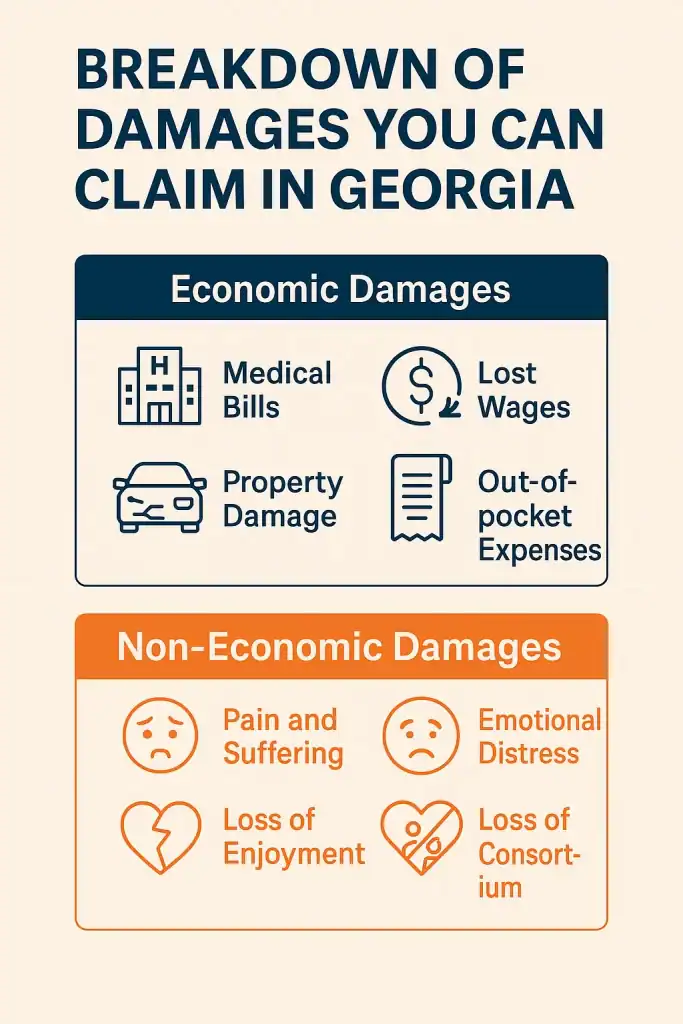
Under Georgia law, you may be entitled to economic and non-economic damages. Knowing the full scope of these damages can significantly increase your settlement value.
Economic damages cover direct costs like:
- Medical bills (past and future)
- Lost wages and reduced earning potential
- Property damage (like vehicle repair after a car accident)
- Out-of-pocket expenses such as transportation or in-home care
But it doesn’t stop there. Non-economic damages, which often make up the larger portion of a claim, cover the emotional toll of your injuries:
- Emotional distress
- Loss of enjoyment of life
- Loss of consortium (impact on relationships)
In severe cases, punitive damages may also apply, especially if the at-fault party was grossly negligent or reckless (e.g., DUI cases). These aren’t just compensation, but are meant to punish and deter.
Pro Tip: Keep a daily record of how your injuries affect your life: missed events, trouble sleeping, emotional shifts, anything. These personal notes can support your claim for non-economic damages, which are harder to prove but essential for fair compensation.
Start Gathering Evidence Immediately
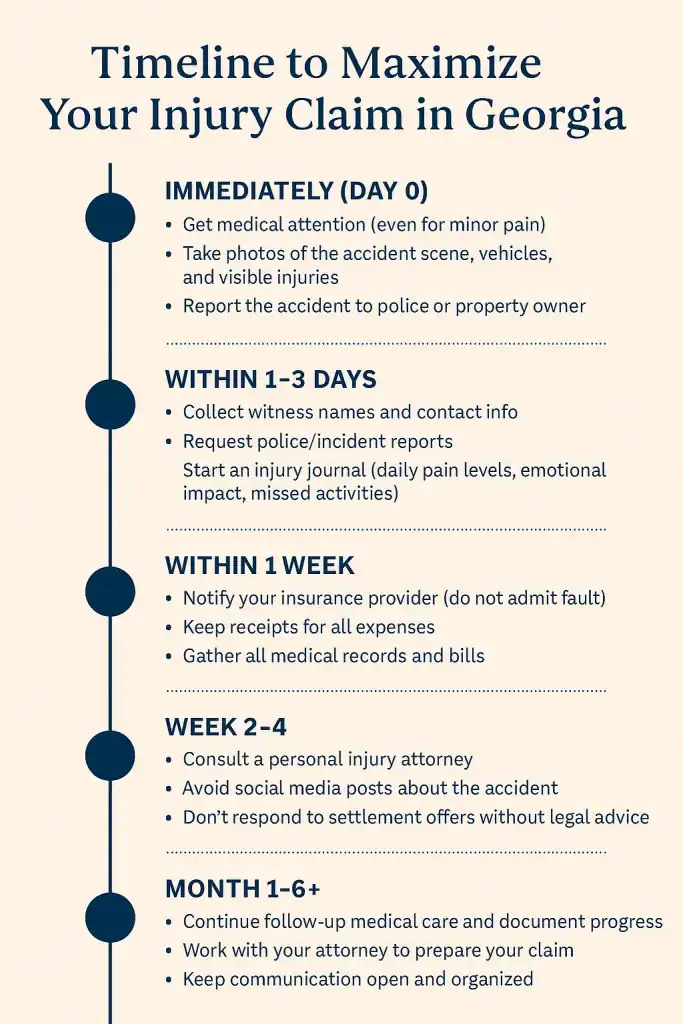
In personal injury cases, evidence is everything. Insurance companies aren’t just going to take your word for it. They’ll surely look for any reason to deny or reduce your claim. The sooner you start collecting solid proof, the stronger your case will be.
Here’s what counts as solid evidence in Georgia:
| Type of Evidence | Why It Matters |
| Photos/Videos of the Scene | Proves road conditions, damage, injuries, and more |
| Medical Records | Links your injuries directly to the accident and tracks treatment timeline |
| Police Reports | Official account of fault, citations, and accident description |
| Witness Statements | Neutral accounts that back up your version of events |
| Surveillance Footage | Visual proof if the crash occurred near businesses or traffic cameras. |
| Receipts/Invoices | Documents your expenses for compensation (e.g., car repair, meds, therapy) |
| Injury Journal | Supports your claim for pain, emotional distress, and impact on daily life |
Georgia’s legal process rewards organized claimants. Keep your documents in one folder, digital and hard copies, and make backup scans. If you’re overwhelmed or in pain, ask a trusted friend, family member, or your attorney to help gather what’s needed.
Timing is also critical. The more time passes, the more evidence fades: witnesses forget, footage gets deleted, and accident scenes change. Aim to collect everything within the first few days of the incident.
Avoid These Common Settlement Mistakes
Even with a strong case, one small misstep can seriously reduce your settlement, or wipe it out entirely. Unfortunately, many injury victims in Georgia unknowingly hurt their chances by falling into common traps. Here’s what you need to watch out for:
| Mistake | Why It Hurts Your Case |
| Delaying Medical Treatment | Gaps in treatment allow insurers to argue your injury isn’t serious or related to the accident |
| Posting on Social Media | Photos or comments can be used against you, and even innocent ones can be twisted |
| Accepting the First Offer | Insurers often lowball you, knowing you’re under financial pressure |
| Giving a Recorded Statement Alone | What you say can be used to limit liability or imply fault |
| Ignoring Doctor’s Orders | Missed appointments or skipping therapy weakens your credibility and damages claim value |
Quick Tip:
A study by the Insurance Research Council found that claimants with legal representation receive settlements that are, on average, 3.5 times higher than those without an attorney.
[Source: IRC Research, 2014 – “Auto Injury Insurance Claims”]
Bottom line:
Your actions after an accident directly impact your payout. Stay cautious, follow your treatment plan, and don’t go it alone when negotiating with insurers.
Consult a Georgia Personal Injury Attorney Early
Hiring a lawyer early in the process isn’t just helpful, it can be the difference between a fair payout and walking away with pennies. Georgia personal injury law is packed with nuances, from establishing fault to proving damages and negotiating with insurance companies who have teams of adjusters and lawyers on their side.
Here’s what an experienced attorney can help you with:
| What a Personal Injury Lawyer Does | Why It Matters |
| Evaluates case value accurately | Ensures you don’t settle for less than your claim is worth |
| Gathers and preserves key evidence | Strong evidence = stronger leverage in negotiations |
| Deals with insurance adjusters | They know the tactics and how to push back |
| Negotiates medical liens | Helps reduce what you owe in medical bills after a settlement |
| Files the lawsuit if negotiations fail | Shows you’re serious, which can motivate a higher settlement offer |
Red Flag:
If an insurer rushes to offer you a settlement or pressures you to skip legal advice, it’s likely because they know your claim is worth more than they’re offering.
Most personal injury attorneys in Georgia offer free consultations and work on a contingency fee basis, meaning they don’t get paid unless you win.
Our Verdict:
Consulting a lawyer early strengthens your case and increases your chances of fair compensation. It also ensures that someone’s watching out for your legal rights while you focus on healing.
Think Twice About Pre-Settlement Funding
When bills are stacking up and your case drags on, pre-settlement funding might seem like a lifeline. But here’s the catch: many of these cash advances come with high fees and compounding interest that quietly eat away at your final settlement. Before signing any agreement, explore alternatives like negotiating with providers, borrowing from trusted sources, or asking your lawyer about delayed payment plans. Quick money now can cost you real compensation later.
Final Thoughts: Get the Settlement You Deserve
Maximizing your personal injury settlement in Georgia means knowing your rights, avoiding costly missteps, and documenting every detail. Don’t let insurance companies rush you into a lowball offer.
If you’re unsure about your next step, Langrin-Robertson Law offers a free consultation to help you understand your claim’s real value. With the right legal support, you can fight for the compensation you truly deserve.
Frequently Asked Questions
What is the average personal injury settlement in Georgia?
While settlements vary, typical payouts range from $3,000 to $75,000, depending on the severity of injuries, liability, and insurance limits. Serious injury cases can exceed $100,000+. Always consult an attorney for a case-specific estimate.
What is the cap on personal injury damages in Georgia?
Georgia does not impose a cap on economic or non-economic damages in most personal injury cases. However, punitive damages are capped at $250,000, unless exceptions apply (e.g., intentional harm or DUI cases).
How do I get the most money from a personal injury claim?
Start by documenting everything, getting medical care, and avoiding early settlements. Then, work with a knowledgeable attorney to negotiate effectively and present strong evidence to support your claim.
How do I get the most out of my personal injury claim?
Maximize your claim by knowing your rights, tracking all expenses, and avoiding common pitfalls like admitting fault or skipping medical appointments. Legal guidance helps you stay focused and strategic.